
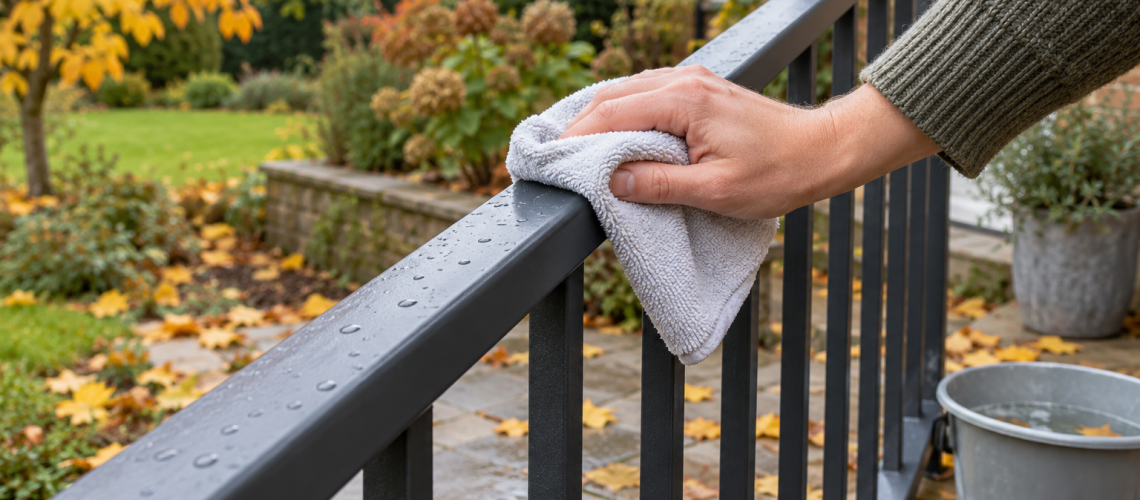
For routine cleaning, powder-coated metalwork should be washed gently with warm water, a suitable mild, pH-neutral detergent and a soft cloth or sponge, then rinsed thoroughly. Always follow the care instructions for your particular finish and avoid abrasive cleaners.
With autumn here, it is a useful time to check the condition of gates, railings and other outdoor metalwork. For homeowners and businesses in Essex, a simple maintenance routine can help keep an existing finish looking good and identify areas that need professional attention.
Does powder coating still need maintenance?
Yes. A durable coating still needs care.
Dust, dirt and other deposits can accumulate on outdoor surfaces. Regular cleaning removes this build-up and makes it easier to inspect the finish underneath. Manufacturer guidance for architectural powder coatings recommends routine washing as part of maintaining the coating’s appearance and condition.
The important distinction is between a dirty surface and a damaged finish. Cleaning may improve the appearance of sound metalwork, but it cannot repair peeling coatings or restore metal that has already deteriorated.
What is the best way to clean powder-coated surfaces?
Start by checking any cleaning instructions supplied with the item or coating. For ordinary maintenance:
- Use warm water with a suitable mild, non-abrasive, pH-neutral detergent.
- Clean gently with a soft cloth or sponge.
- Rinse thoroughly with clean water to remove detergent residue.
Avoid scouring pads, abrasive polishes and scraping tools. If marks remain, seek advice before switching to stronger chemicals or more aggressive cleaning methods. AkzoNobel’s Interpon guidance recommends gentle washing and specifically warns against abrasive cleaners and certain solvent-based products.
What should you check while cleaning?
Use the opportunity to look closely at areas that are easy to overlook, including edges, joints, fixing points and places subject to regular contact.
Look for:
- Chips or scratches exposing the metal.
- Blistering, lifting or peeling around damaged areas.
- Rust staining on steel components.
- Repeated rubbing where moving parts touch.
- Areas where the finish appears noticeably different from the surrounding surface.
Take clear photographs of any concerns. These can help a metal finishing specialist assess whether the item needs further inspection.
Avoid covering questionable areas with another coat of paint before establishing what is happening beneath the existing finish.
How often should outdoor metalwork be cleaned?
Follow the maintenance schedule for the coating rather than applying the same timetable to every item.
An entrance gate beside a busy road in Brentwood may experience different conditions from metalwork in a sheltered garden in Ingatestone. Coastal exposure, industrial surroundings and the amount of dirt accumulating on the surface can also affect maintenance requirements.
If you are unsure which coating was used, ask the original supplier or finisher for suitable care advice.
When is professional refurbishment worth considering?
If the coating is peeling, corrosion keeps returning or large areas are damaged, cleaning alone is unlikely to resolve the problem. The item needs assessing before deciding whether refurbishment is appropriate.
Preparing metal for a replacement coating is a different task from routine aftercare. Our guide to why surface preparation matters before powder coating explains the importance of removing contamination and deteriorated finishes before recoating.
Need advice on metal finishing in Essex?
Advanced Metal Finishers is based in Ingatestone and offers powder coating, sandblasting and metal finishing services. You can explore our powder coating services in Essex or contact our team to discuss your project.
Include photographs, approximate dimensions and details of where the item is used. Whether you are maintaining existing metalwork or considering refurbishment, this gives us a useful starting point for discussing the next step.